Episode Transcript
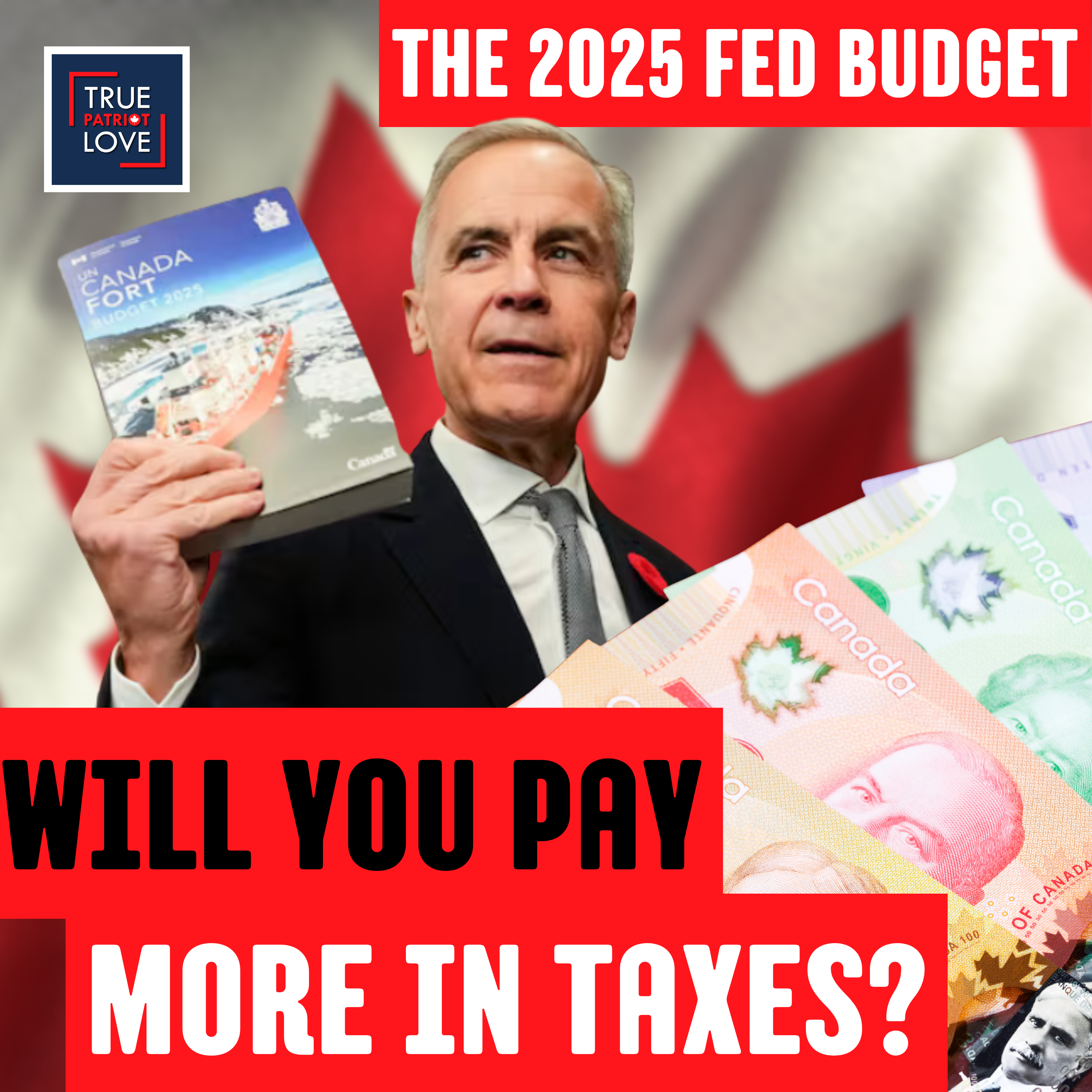
[00:00:00] Speaker A: Today on the True Patriot Love Media Network in our economy pillar, we're going to break down the revenues and expenses in the 2025 federal budget just like you would in your own daily personal life or in a small business.
With federal revenues hitting an all time high of 507.5 billion through personal and business taxes plus other revenues, the federal government keeps projecting them to grow every year.
Where is the breaking point for our tax increases? But hold on. Federal expenses are keeping pace, growing at an unprecedented $586 billion in 2026. It's your taxes and your dollars being spent. And as a shareholder of Canada, you deserve to know where they're going. Stay tuned, learn, get informed as you have every right to understand how the deficit hit a record high this year A of $78.3 billion and why our debt ceiling is being increased to $2.54 trillion. But hold on, don't forget the second bucket of expenditures that no one's talking about. Capital expenditures of $45.4 billion.
Why, you ask?
The majority of the population and your government representatives probably do not understand the accounting of the budget numbers has changed this year and quite frankly they can't follow it. We will break it down for you, so stay tuned and let us know your thoughts after a long read. We are here today to go through the 2025 budget. And in October we did a couple shows and we broke down the 2024 budget so we could get the basis of what we're going to talk about today. I'm here with Mike Wixon. I'm excited today to go through it. I have lots of numbers so I apologize in advance, Mike.
[00:02:07] Speaker B: No, no, it's all good. I mean I should point out to people that a binder has been produced that will take two binders that will.
So I do really appreciate you taking the time because your background and finance economy, you know, being an accountant to.
[00:02:23] Speaker A: Start with, I was. Yeah.
[00:02:24] Speaker B: Makes a difference to how you see this. And just the few minutes that you and I took discussing it in advance shocked me. This is a completely new way to look at a budget for Canadians and I think we need to understand what that means.
[00:02:38] Speaker A: Yeah. And I don't think many Canadians focused on that. You know, in October, Prime Minister Carney came out and he said, listen, I'm going to change this budget to an accrual based budget. And so people's eyes glaze over right away because it's accounting and I get it.
So today I'm going to try to, I'm Gonna split it into bucket one and bucket two so I can kind of, you know, go through. And what I tried to do is like I did in the last show for 2024, I tried to actually create a profit and loss statement for the federal government. Oh, like a corporation with a corporation. And what I did is in order for make it work for me, I actually tied it back to the budget deficit that was announced. So they came out and we got it was, you know, they did a good job of softening us up, gave us the budget deficit. They said, listen, it's going to be large, it's going to be generational.
And people were making guesses on the news. Mainstream media was, I think it's going to be this, I think it's going to be that. Well, it came up to $78.5 billion for 2026.
So they put out a five year budget. So the budget's to 2030.
[00:03:50] Speaker B: Okay.
[00:03:51] Speaker A: What I did is I only did to 2027. So to make it easier, stop at 27.
[00:03:58] Speaker B: When they went to 30, I didn't.
[00:04:00] Speaker A: Think it was worth the time. You know, I hate to say that. I think they did a really good job. I'm going to, you know, pros and cons. I think you got to give people credit where it deserves. I think the people that wrote the budget did an excellent job. So, you know, for those of you who, you know, you're not accountants, I'll just say one of the things that was super hard. They were given the task to convert from cash based accounting to, to accrual based accounting. So that's a tough challenge. So they had to go back and they had to restate all the numbers and they had to get it all put together, they had to write it. It was a very complicated budget. Not a lot of people keep up and I'm sure not knocking politicians. I'm sure their staffers had a hell of a time. I'm sure the ministers, quite frankly don't have a clue. Most of them, if they're not have a finance background of what the budget is because it's very hard to read.
And that's not a knock on them, it's just reality is because we switch the basis with which we account for all the numbers. Yeah, it's difficult to get through. So it took some time. Like it took off and on. It took me about a week to get through it.
[00:05:01] Speaker B: Yeah. And not just you, but a team of people. I should shout out the people as well. Christoph Beacon, MD and Nick everybody. I Noticed a whole gang of people crunching these numbers because it is a different way of looking at. It is a budget. Paul, what is the difference between the two? Can you just take a second and explain what's the difference between a cash basis budget and an accrual budget?
[00:05:27] Speaker A: Well, I'll keep it very simple. So I'm not going to get into the complex complexities of it, but it's simply cash. The way governments used to do budgets is if they spent the money, they recorded it in the year they spent it. Yeah, right. Accrual base. Basically, if you make the obligation or if you, if you make a policy for the project, you account for it over five years, you might account for the obligation in this year and then accrue it over a number of years before you spend the money you charge amortization on assets. So really it is a shift of a lot of your expenditures from your profit and loss statement to your balance sheet.
[00:06:07] Speaker B: So is it like saying, okay, over the next five years we're going to invest in all of this that shows up in the budget?
[00:06:16] Speaker A: Yes.
[00:06:17] Speaker B: And a lot of it we're going to put on the asset books before we even build the projects. On the basis of us making these extrapolations and assumptions, we're going to put them on the books as assets. Now is that, is that how this operates?
[00:06:32] Speaker A: Yeah. Once you make the obligation to do them, you record them. Right. So then you, and then as time goes on, you pay for them, there's a liability comes into place. So it does sit, it does sit mostly, you know, again on your balance sheet. Like you said.
[00:06:45] Speaker B: What if the projects don't come to fruition?
[00:06:48] Speaker A: You write them off, you know, or you might adjust, you do adjusting entries. So, you know, it's, it's the norm for companies. I think most of us in companies do. Do you know, it's accrual based. So I think it is the norm. But one of the things I found interesting, we're not talking about the capital expenditures. So what I did so to make it. And I want to illustrate this as we go through the profit and loss statement. So you want to jump in and we'll go through the profit and loss statement.
[00:07:15] Speaker B: Show me some stuff.
[00:07:16] Speaker A: And then when we get through the profit and loss, I want to talk about how all of it works.
[00:07:20] Speaker B: By the way, you can download this yourself and follow along. And we're starting on page two here.
[00:07:26] Speaker A: Yeah. So the first thing, you know, we talked about this before and we see, we're seeing roughly a 1% population growth, you know, so we've dialed down immigration, you know, with birth rates and everything else being so low, we're at roughly a 1% population growth. So on our last show we talked about the increase from 2019 to 2024 on personal tax rates and it was pretty aggressive. Right.
We had already seen coming out of COVID a pret indexed personal tax rate. So we're now which I think in those days we basically were saying tax paid by Canadians was roughly 7,000. Right. The average income of a Canadian is about 65,000.
[00:08:14] Speaker B: Okay.
[00:08:15] Speaker A: You know, given we have about 30 million people paying taxes, you know, rough here and there, it might be about 31 now. But if you take a look at seniors and you take a look at people who are not on social assistance, you take out minors, you're roughly in a 41 million person country. You're looking about 30 million paying taxes.
[00:08:34] Speaker B: Okay.
[00:08:35] Speaker A: So we took a look at it and it's going to go up to 2027 by 13%.
So it's not an, it's not a, it's not a population growth issue is what we.
[00:08:47] Speaker B: I was going to say. So.
[00:08:48] Speaker A: Right.
[00:08:49] Speaker B: So we're income from personal income tax is going up by 13%, but not necessarily because we have a new base of Canadians paying tax here.
[00:08:57] Speaker A: No, no, it's not. It's not at all. It really is. We're going to the indexing on how we pay our income tax is going to increase. So in this budget we've actively made the decisions come April 30th every year we, you know, we get our income tax ready, hopefully send it before some of us get refunds. Some of us pay.
In this case, Canadians will be paying more income tax by about 13. So the average rate of about 7,100 will go up to, you know, 85, $500 roughly, give or take a few dollars. So that's going up. So we saw that the next one, which was interesting in 2027, we're at $96.7 billion that corporations are going to pay in taxes. Now.
[00:09:45] Speaker B: That's a stiff increase too.
[00:09:46] Speaker A: It is a stiff increase and it's a very interesting.
You know, I talked about it this and just for everyone, just remember this is the federal amount.
[00:09:56] Speaker B: Right.
[00:09:56] Speaker A: You also have provincial tax. Right. So this is only the federal dollars that going into the federal government's coffers. So this is going up to $96.7 billion. It had already gone up, quite frankly through Covid. It was a huge amount when I did this I was actually shocked. It actually had gone up from 2019 from 50 billion to 82 billion.
And now it's going up from 82 billion to 96.5 billion. Right. Or 7 billion.
[00:10:29] Speaker B: There was a major shift in increase in corporate tax around that time too.
[00:10:32] Speaker A: Yeah, corporations, you know, for all the people, you know, who knock corporations for not paying tax and you know, there's, you know, roughly 130,000 corporations.
We see corporations come and go every year in Canada.
So that's a pretty steep increase.
Average company, if you look at the stats, and this is give and take a few bucks, is about a quarter million dollars in income tax a year. That's small, big, whatever, average.
And quite frankly, this is going to climb 17%. So you know, tack on, you know, a number we're going to talk about a minute. Unemployment insurance, all the other taxes you.
[00:11:12] Speaker B: Pay becomes expensive to run a corporation.
[00:11:14] Speaker A: Now sales like. Yeah, you know, this is where we get knocked in Canada. And you know, this is an investment budget. So this is, you know, not a great indicator.
You know, you don't want to see it go that much. And quite frankly, in our show on the 2024 budget, I thought we had peaked.
I really did. I said that number of times.
Yeah, I'm like, I'm like, you know, because you saw the 2019-24 increases in personal and corporate tax and you said, okay, that's. We're probably hitting our.
[00:11:43] Speaker B: There's no more room.
[00:11:44] Speaker A: Yeah, yeah, we're no more rumor. We're at the top of the mountain.
[00:11:48] Speaker B: This one struck me as a line item that I never even think of. Non resident taxation.
[00:11:55] Speaker A: Yeah, non resident taxation. So this makes up, it's interesting what makes up this line item. So you basically have energy taxes, which is gasoline, diesel, you have, or sorry, no, you have. This is non resident. I jump back for a minute. Non resident taxes. Now they have it going up. Up, right?
[00:12:18] Speaker B: Yeah, yeah, up by 12%.
[00:12:20] Speaker A: Yeah. And I'm not sure that, that seems a little odd to me, quite frankly that we're going to have a non residence tax increase, you know, unless we're thinking we're going to get more people come to Canada and spend money. I don't, I don't.
[00:12:34] Speaker B: As a non resident in Canada usually.
I don't understand this number, to be honest with you, because yes. You initially come to Canada with your own funds, hopefully.
[00:12:45] Speaker A: Yes.
[00:12:45] Speaker B: And you're spending that money here to get yourself settled.
[00:12:49] Speaker A: Right.
[00:12:50] Speaker B: That seems like a ridiculously high number to me.
[00:12:53] Speaker A: Well, I think it's A lot of.
[00:12:54] Speaker B: These numbers, I just don't understand it.
[00:12:55] Speaker A: Yeah, it is, it is. And I think a lot of these numbers are quite frankly just indexed going forward. So I think, you know, they, they always, I call these revenues and the expenses we're going to talk about that tie into the $78.5 billion deficit for this year, which is 2026 kind of standing revenues and expenses.
[00:13:18] Speaker B: Okay.
[00:13:18] Speaker A: Yeah. So when I call, these are ones.
[00:13:20] Speaker B: So this has moved forward.
[00:13:21] Speaker A: This is a lot of times, you.
[00:13:22] Speaker B: Know, on a trajectory that's not stopping.
[00:13:24] Speaker A: Yeah. You know, when it's interesting when you, a lot like this is where we are a little bit similar to the US Our politicians don't spend a lot of time on the givens, the standing expenses or the standing revenues. So whether, you know, when there's something they need to talk about, it comes to the table. But for the most part every year, whether it be personal tax, corporate tax, it just indexes up expenses for seniors and for health care. They just index up, index up. So we just kind of leave those. They sit on a trajectory, they keep going up and quite frankly, we don't really seem to adjust them. Which when we get to the end of this, you're going to see we didn't really make as far as other than a few governments expense changes. We didn't really do a lot to our standing expenses and revenue for this year.
[00:14:15] Speaker B: Okay.
[00:14:15] Speaker A: Okay, next one, gst.
This was an interesting one. We had it going up to $56.5 billion for 2027 from 51.4 in 24.
[00:14:31] Speaker B: So if this goes up 10%, is that based on an increase in the GST? Potentially we're going to hear an announcement that that's going to go up or that we're expecting that there's going to be that much more in country business.
[00:14:44] Speaker A: They haven't announced, so they're not announcing an increase in gst. But I think they're thinking given where we are with the US Right now, there's going to be a lot more trade in country.
So they're hoping. Now it's interesting because, and I'm not going to jump too far ahead, but we're projecting quite a high unemployment rate, almost 9 to 10% coming up in 2027. So I find this one a little interest. They think people's spend patterns are going to increase in country again, I think.
[00:15:14] Speaker B: Unless it is just tariff based in country shopping or in country commerce. Right.
[00:15:20] Speaker A: Yeah, yeah, it could be. But they've also got below. They have their Excise tax amount skyrocketing quite a bit. So that, which for the most part, that's your excises, taxes and tariffs. Right. So that's where that comes into play.
[00:15:37] Speaker B: And so there's another 7 billion there, another 5.6 billion just this year. But over the span of, over the span of four years, they're predicting a combined almost $20 billion in revenue between custom duties and excise tax. Yes, that's a, that's a lofty assumption.
[00:16:01] Speaker A: It's aggressive. You know, the one thing we talked about going into this budget or the government talked about is how aggressive they were going to with respect to their projections and also their investments, which we're going to get to in a minute.
So unemployment insurance, as I talked about earlier, also going up 13% to $33.3 billion.
Another hit for corporations. Half of that paid by corporations.
[00:16:26] Speaker B: So then there's another 6% on top of the 17 that you're already paying.
[00:16:30] Speaker A: Yes, employees and corporations are going to take the hit. So that's, you know, as we're seeing.
[00:16:36] Speaker B: Plus you're going to be paying the energy tax. That is brand new.
[00:16:39] Speaker A: Yeah, yeah, exactly. And that's a substantial increase for a person right now who's just trying to eke out a living, pay for groceries, car.
But they're going to get hit with a tax hit and then they're going to get some EI hits, total revenue off of this.
[00:17:00] Speaker B: After other revenue, which always amuses me, there's only just $37 billion in other revenue that's going to be up. So other revenue is up 48%.
[00:17:10] Speaker A: Yeah. So this is a couple things. So this usually includes a bunch of other programs.
It's crown corporations that are in there and then like foreign exchange return on their investments. So this is turning out to be where they're allocating the benefits of all their investments. So they're saying by making all these investments in infrastructure and everything else, they think that they're going to see a substantial increase in other revenue flowing into the country.
[00:17:43] Speaker B: So not only are they amortizing the expenses over a long period of time, they're assuming profitability on that over a period of time as well.
[00:17:53] Speaker A: Yeah, they're budgeting that they're going to see the increases from that. Right. So, you know, I'll be honest with you, Paul.
[00:17:58] Speaker B: If I did my home economics this way, I'd be in a lot of trouble.
[00:18:03] Speaker A: Well, it's aggressive. Right. You know, you'd be buying, you know, I was, you know, laughing about it. With you earlier, it's kind of like the story where, you know, your, your business is losing money, but you and your wife decide to actually go out and buy a home and put a pool in it.
[00:18:19] Speaker B: Yeah.
[00:18:19] Speaker A: Right.
[00:18:19] Speaker B: So now I've got to service the losses of my company.
[00:18:22] Speaker A: Yeah.
[00:18:23] Speaker B: I have to come up with a home payment and these renovations.
[00:18:28] Speaker A: Yes.
[00:18:29] Speaker B: But don't worry, I'm going to amortize all this over 40 years.
[00:18:32] Speaker A: Yeah. And the company's going to turn around and I'm going to do great.
So that's where it is. Now, if we jump over to page three and we go to the expense line, there's some really interesting things to talk about here. So elderly benefits, which I talked about on the last show, we're about 7 million seniors in Canada right now. It goes up around 3% a year. So our aging population increased about 3%.
So you can see from 2024 it's.
[00:19:06] Speaker B: Jumping up again, not 12%, but 17%.
[00:19:10] Speaker A: Yeah, exactly. And so the indexing on seniors payments is very aggressive. It always has been. They're a large voting bloc. The government has always treated them rather well. And quite frankly, they're going up to $89 billion in 2027 for benefits. It's interesting, if you follow this out to the 2030, if you go out to 2030 and you look at what they've budgeted, it actually hits the hundred billion dollar mark. I don't think anyone would have thought that elderly benefits would have ever been $100 billion.
[00:19:45] Speaker B: Is this an aging population thing?
[00:19:48] Speaker A: No. Well, it's a combination. Right. It's a combination of very aggressive indexing on the payments. So they get raises every year that are really nice. They're sweet. And quite frankly, it's a 3% growth rate. It really is very easy to track. We talked about earlier, this is the unemployment insurance amount. Now this is growing. They're basically saying right now, if you do the math, we have roughly 1.5 and unemployed people in 2024, 0.5 million.
[00:20:23] Speaker B: Okay.
[00:20:24] Speaker A: So what they're saying here is it's spending $23 billion. We have 1.5 unemployed people.
[00:20:31] Speaker B: Now if you take a look at this chart, in 2024, it's at 23,023 billion. Sorry, 23 billion.
My apologies.
And it's up $10 billion, $11 billion. Almost over four years. Now, correct me if I'm wrong, the strategy of this budget was to get us back to work.
[00:20:53] Speaker A: Yeah, well, that's not, you know, as of 2027, all those things haven't kicked in. So, you know, we're going to be, we're going to be ranging in the 9 to 10% unemployment rate. Really dangerous territory because no one wants to be in that.
[00:21:09] Speaker B: That's depression level unemployment.
[00:21:10] Speaker A: Yeah, it is. And you know, that was certainly recession level, a 1930s number. Right.
Yeah. So but you know, recession level, if you know, cpi, if you believe the CPI numbers, they're usually crap anyways, quite frankly. And our inflation rates are usually understated.
[00:21:27] Speaker B: So it seems like they are all the time. Yeah.
[00:21:29] Speaker A: For the most part, probably have been in a recession for the last two years. If you look at it with respect to our low growth rates, really what.
[00:21:37] Speaker B: This says is we're either going to pay more employment insurance per person or we have a lot more people unemployed.
[00:21:43] Speaker A: Yes.
[00:21:44] Speaker B: Simply put.
[00:21:45] Speaker A: Yeah, well, we're going to index it slightly, but quite frankly, we're going to have a lot more people unemployed.
[00:21:49] Speaker B: But don't worry, after 2027 we'll have all of this capital asset that people will be employed at.
[00:21:56] Speaker A: Yeah, well then that's the, you know, again we talked about. It's kind of the conundrum they're in because after the last decade they have to spend their way out of it. They have to invest in things. The challenge will be, and we're going to get to that in the show later in the shows coming up, they have to spend on projects that are going to have a great return on investment. They're going to have to have an increase in gdp.
[00:22:22] Speaker B: Children's benefits was one that got me as well.
I think it's great. We do need to have support. We want healthy children.
But we have a declining birth rate here in Canada and a sharply increasing 18% being spent on children. Children's benefits.
I'm trying to unravel that one.
[00:22:44] Speaker A: Well, you know, two things on that one I mentioned on the last show. So our birth rates are like 1.3 children per woman per ladies in the country who are able. Right. To have children. And it's declining. So we're declining. We're in the lowest quartile of birth rates in the world right now, which is not a great stat. Our immigration levels have been high. So it's kind of buffered the growth in the country by having immigration rates high.
But it's not a great stat. The program doesn't work.
So the expenditures, this program and the child benefit programs that we have in place have just not met the objectives that people need. And quite frankly, it's a combination. Mike of a bunch of things. So it's not just.
I wouldn't, I wouldn't say we want to take anything away from people. $10 a day, you get daycare. They're all great things, quite frankly. But if you can't buy an affordable home and if you can't buy groceries and you can't, you're not thinking about having kids. So if you've already had a kid and you're struggling, it helps you a little. But quite frankly, the problem is we can't get people to enter the family zone, let's call it, because they can't get their head around how they're doing everything else.
[00:23:59] Speaker B: So, yeah, there's no financial security for people by and large to keep that growth potential for family growth. You know, I had three kids.
You've had many kids as well, I think 16 or 17.
No, not that many.
[00:24:17] Speaker A: No.
[00:24:19] Speaker B: The reality is that's if you take a look at many of the people just working for us in that age group that might be having children soon or having one child, that's their thought process. I can afford one kid and that's it. And so you're right. I don't think that we've actually put this money toward incentivizing people to have families.
[00:24:39] Speaker A: Yeah, it's got.
[00:24:39] Speaker B: Everything else is too difficult.
[00:24:40] Speaker A: It's got to be a full package. And we didn't do a good job. But what we're doing is we're sustaining. And because these are, as I mentioned, these are standing expenses, we just take programs and we clip them along, even if they're not working. And then we index them and we increase them, but they don't have the results we need.
[00:24:56] Speaker B: So Paul, can you explain this line to me? The COVID19 income support for workers line? Yes, what is that?
[00:25:04] Speaker A: So that was the member of COVID You can see we were paying money to the program and it just dwindled out in 25, right? Yeah. And we started to get some money back. Remember we were getting. Oh yeah, we were recouping some funds. So we actually got recouping of funds. So as we paid back our COVID supports, these were the monies that came back and that's come to an end. So by, you know, end of this.
[00:25:26] Speaker B: Year, we could get that off the list.
[00:25:28] Speaker A: It'll be gone.
[00:25:29] Speaker B: So by 2027, $152 billion in expenses just along those lines right there. All of them with fairly major increases over a four year period.
[00:25:46] Speaker A: Well, hold on, go to page four. Because it gets better.
So Page four. So it's our transfer payments to other levels of government.
We just started to see other provinces unveiling budgets and quite frankly, they're hitting deficits. But this is the money we pay to the provinces for healthcare equalization payments and other fiscal arrangements. Right.
And this is going up the Ontario.
[00:26:14] Speaker B: Fund, I think, is its.
[00:26:15] Speaker A: Yeah, yeah, we just, you know, and again, an increasing deficit. A lot of scrutiny on that over the last week. But in 2024 for healthcare and social programs was 66 billion. It's going up to 75.3 billion. So on previous shows, we've talked about this a lot.
We continue to aggressively increase our healthcare expenditures. Something that people don't know.
They think we're underfunded in the healthcare world.
[00:26:44] Speaker B: No, that is not the case. No.
[00:26:46] Speaker A: Yeah, we're not. It's. We're finding out pretty quickly that comparatively per capita, we are actually third in the world in healthcare expenses.
[00:26:55] Speaker B: Just miserably ineffective at spending it.
[00:26:57] Speaker A: Yeah, our gdp, our healthcare expenditures. Gdp, third in the world. And I think we're number five in the world on total healthcare expenditures. So we just haven't figured out all the issues in that system right now. And that's, that's a challenge.
[00:27:12] Speaker B: But, but we're throwing another 14% at it over.
[00:27:15] Speaker A: We are, we're ramping up now. Will there be any net benefit to it?
I don't think so. I'll be truth to you. I think this is just money that's going to get sucked into the system. So I think the system, the way it's working now, quite frankly, it'll be put into the system and then it'll basically just be eaten up. I think this is money.
[00:27:34] Speaker B: It really doesn't seem like, I mean, whether our healthcare is underfunded or overfunded. 14%.
To change a healthcare system that is so obviously broken, I think would shock Canadians in itself. I think Canadians would say, no, we need a 20 or 25% increase to do something that'll make a difference.
[00:27:52] Speaker A: Well, that, yeah, their service levels are down, their wait times are up. You know, they're seeing all the negativity and they're saying we've got to spend. Let's throw money at it. Throwing money at. It's not based on the stats. Is. That's not the issue? No, that's not the issue at all.
[00:28:07] Speaker B: So there's something broken. Broken in the system.
[00:28:10] Speaker A: Yeah, it's broken. So transfer payments. You know, I think other than Alberta, I think everyone gets transfer payments now. Correct me if I'm Wrong. And by the way, if anything you see in this presentation, you know, please, if you have another idea, if you think you'd like to correct us on anything, just send us a note. We're really interested in your opinion.
[00:28:30] Speaker B: I don't think anybody here is trying to be an authority. We're literally going through it. We. But, but poor Paul, because he is our economist.
He gets. And also I think, I think you found it very interesting because this time we have a different kind of budget.
[00:28:46] Speaker A: Yeah.
[00:28:46] Speaker B: And that's important for people to understand. So take it a second. To go through it, I think is worthwhile.
[00:28:50] Speaker A: Yeah.
Pollution pricing, what is that? So that's our carbon tax. That's gone.
Remember, we charged it, then we rebated it and it just phases out over time. So you can see.
[00:29:06] Speaker B: Wow, we still have to hand back $30 billion, huh?
[00:29:10] Speaker A: Yep.
[00:29:11] Speaker B: Wow.
[00:29:12] Speaker A: Yeah.
[00:29:12] Speaker B: $30 billion has to. That's a pretty big commitment. When you, when you hear them say, okay, we're not, we're going to cut the carbon tax, you know, they're not getting rid of 30 billion. Take a look elsewhere in the budget.
This is very interesting. So transfer payments.
[00:29:28] Speaker A: Yep.
[00:29:28] Speaker B: In 2024 were 96 billion.
By 2027, a 22% increase of 117 to 117 billion.
[00:29:38] Speaker A: Yeah. No, it's crazy. And quite frankly, when you look at it, you got two things here. You got the transfer payments which are going up. And this is kind of the slush. I call this on the last show. This is the slush fund. Right. So this is kind of where everything gets thrown into. If you look at, at companies, you know, there's always an account where you don't know where to classify it, so you throw it in this line item. But this is a very big line item. Right. So going up 22% at 117.
So this is anything from payments to other countries, payments to first nations, any programs, and a lot of defenses in here. So you can see we had a pretty healthy increase in our defense line item.
[00:30:23] Speaker B: Yeah.
[00:30:24] Speaker A: Which we're going to go through on the next show. So these are all in this line item. And then which is talked about quite a bit. They said we're going to decrease spending on government. And on the last, the 2024 breakdown, I made a comment that it's interesting when the biggest department or the biggest spending in government is government.
And it is, it's an Antony of itself.
They want to stop that. We saw through the last decade about an 8% growth in the government spending the operating expenses, they've said timeout and they're starting to ratchet that down. They have a plan to eliminate 40,000 jobs through mostly attrition. If there's a job posting, they won't fill it. People will retire. So that's a phasing program that they have going, and they're dialing it down to 3%. So it's not. Not going down, but it's not going.
[00:31:20] Speaker B: Up to 8% again. Yeah, in this arrangement, it's going up.
[00:31:25] Speaker A: It's another $4 billion versus 24, and it's $144 billion. So there's lots of room there. They talk a lot in the budget about programs and expense review and all that good stuff.
But in 2027, it's 3% increase.
And then the one that gets the most press, it's basically the public debt charges, the interest on our debt climbing from 47 billion in 2024 to 60 billion in 2027.
[00:31:58] Speaker B: That's 27%.
[00:32:01] Speaker A: Yeah, well, it is, but our debt ceiling. So I think the government last week went to.
It's the Auditor General, I think. Is it, Christoph going to help me with that? But they went to him and asked him for a debt ceiling increase to $2.54 trillion.
So, you know, we were looking at that. You know, the question came up the other day, what is the US and I think they're 38 trillion.
[00:32:31] Speaker B: So if you compare.
[00:32:33] Speaker A: Yeah, we're in the same ballpark.
[00:32:35] Speaker B: Not far off.
[00:32:35] Speaker A: Yeah, we're not far off. 10 times the population. So.
[00:32:38] Speaker B: So, yeah, which makes sense. I mean, we are an extension in many ways of the U.S. i mean, sovereignty aside and everything, we are going to be affected in similar ways. Right. To. To match economies.
[00:32:50] Speaker A: Yeah.
Except for, if you think about it, it's a little crazy. We actually don't have a military like they do. So quite frankly, they spend a trillion dollars a year almost on military at this current time. And we don't. Right. So, you know, we have a fairly comparative growth on our debt ceiling, but we don't massive. We don't have a massive spend, which is defense.
[00:33:16] Speaker B: Let's not tell them that.
They'll be asking for us to chip in, which I've actually even heard Trump.
[00:33:22] Speaker A: Say a couple of times.
And then at the end, we have actuarial loss, which quite frankly tends to be our pension decline. So it's the money that are. Pensions are losing as the markets change.
And, you know, it'd be nice if that flipped a little, but quite frankly, it hasn't in the past. So we've never projected from what I can remember in the last decade, an increase. And again, I might be wrong, but I've only seen this as an expense item as we go through.
Which means, you know, the erosion of our government pensions which tend to be spent. Which is interesting.
We looked at this last show. The balance of our investments by our government pension funds are in the U.S.
oh yeah. So it was like two thirds of our spending on our investments of those pension funds don't even occur in our own country.
[00:34:17] Speaker B: So once again, tied to the US economy.
[00:34:20] Speaker A: Yes, we rise and fall down, which we're going to hopefully change that. Hopefully there's a way to get around that.
So, okay, so now we talked about, and this is where I wanted, you know, we've been through that. So you know, we looked at the revenue, we looked at the expenses, we looked at it from 2025 to 2027. Right. And we, we basically did a full analysis on 2024. So we understood what had happened from, from 2019 to 2024.
[00:34:56] Speaker B: Which by the way, I don't think anybody has done out there. It was so funny. I was looking out there for who has done that analysis. It's really important because you realize where we're at and that it's only part of the picture with this budget.
[00:35:11] Speaker A: Well, it is. And quite frankly, you had to figure out where we were before COVID where we were after Covid, and then now you're okay. Now I know. So. So we started looking and this is where it got interesting because when we first heard about the budget, all people focused on really was the 2026 and everyone remembers. I don't want to harp on it, but there's been a lot of the election. You had the governments not sitting for the federal government forever and it seemed to take a long time. We were waiting for the NDP leader to retire and a bunch of stuff was going on. And it was keeping government one more.
[00:35:55] Speaker B: Tick against our pension budget, by the.
[00:35:57] Speaker A: Way, and it was keeping government not seated for quite a bit of time. So we didn't really see what was happening in 2025 because we didn't get a financial update for quite a long time. So this year, middle of the year, we got an update, we started to see what 2025 was and then we see 2026, but we're already in November, we're at the end of the year. So quite frankly, March year end is a government year end. So 2026 ends in March 31st so pretty much we're going to. Our deficit on those standing expenses we just talked about is going to be $78.3 billion.
[00:36:42] Speaker B: Wait a minute.
On January, sorry, March, after they do this.
So that's not part of this budget.
That's not part of the expansion of this budget. That's just money on the books that we're going to spend ongoing. It's the base.
[00:37:00] Speaker A: It's the base operating. It's to pay the seniors, pay the pensions, pay health care. So just if you think of it as your home home, you know, it's. The 78.3 billion is pretty much just what it is to, you know, keep your home running, pay the utilities.
[00:37:18] Speaker B: This is not part of the expansion and development budget.
Just no paying our bills.
[00:37:24] Speaker A: Well, that's. So Bucket one, I call it. Let's do it this way. Bucket one is just your regular expenses and revenue.
[00:37:30] Speaker B: Right.
[00:37:31] Speaker A: So that's just the money you make every day, less the money you spend.
[00:37:35] Speaker B: Okay.
[00:37:35] Speaker A: Right.
Bucket two is what your capital is.
That's if you want to buy a new home, a car, put a pool in. That's that type of stuff. And the layman's term for a person.
[00:37:47] Speaker B: New money to spend.
[00:37:48] Speaker A: Yeah. For government. That's basically the capital projects. That's the new money they want to put into the economy. So that's really what he's talking about, the prime Minister, when he's talking about investing in the country. Right.
[00:38:02] Speaker B: He's not saying that he's putting $70 billion toward new.
He's saying combined our house expenses and our desire to renovate and put a pool in.
That's the budget we're looking at here, all of it combined.
[00:38:19] Speaker A: Well, he's not really saying he is and he isn't. Right. So he's kind of telling that. And this is the media spin on it, their spin in the budget. There's a lot of graphs talking about the full spend over five years and everything else, but you really have to break it down by year to figure out where it's going and how.
So in 2026, so the year that's going to end and the accounting audit, we're going to basically spend $123.7 billion on the money we lost as a deficit. So the money that we were over, so there are revenues, were not enough to cover our expenses.
So we were running a business, but we didn't make enough money to cover the expenses.
So we basically were over 78.3.
[00:39:11] Speaker B: That's our 80 billion right there.
[00:39:14] Speaker A: And then that's where we decided then to spend money on projects.
So then the new pool, right. And that was the $45.4 billion.
[00:39:28] Speaker B: So all 123.
[00:39:32] Speaker A: Our expenditure for the year with the two combined is 123.7.
The financing requirements. This is buried, I think, on page 280, something in the budget. They came out and said, well, because the money we spent, we lost the money. The revenues being not enough to cover our daily expenses and the money we spent on projects, we need financing of about 137.9 billion.
So to keep the lights on and keep going, we need to borrow.
So we need to go out and borrow money.
Bonds, print money, whatever we need to do that.
So we need to get 137 to cover.
Now, the interesting thing, if we would have done it, and this is very complicated, but I won't spend a lot of time on it, if we would have done stayed under the old accounting methodology, that would have shot up by another 30 million. We would have been about 30 million higher because under a cash basis, our cash capital expenditures would have been significantly higher.
[00:40:42] Speaker B: Right. Okay.
[00:40:45] Speaker A: For the time being.
[00:40:46] Speaker B: But because this has been amortized over such a long period of time, we see it as a lower number.
[00:40:53] Speaker A: Yes, we see it as low. But we still, we still, you know, in the budget, they're still saying we need to go out and we need to borrow $137 billion. And then for 2027, it goes up to 149 billion. So we're going to have a slightly lower.
[00:41:10] Speaker B: So we're going to go and borrow another.
What is that? Another $11 billion the following year.
Yeah, well, just to match the budget.
[00:41:19] Speaker A: So here's the thing.
Our operating deficit goes down, so we're going to start to get our operating deficit down to 65.4 in 2027. That's that first year I was documented after we've changed the accounting systems. And then basically we're going to spend 56.7. So for 122 combined billion dollars. And by the time we go out and refinance it, we're going to need about 100,000 dol. 149 billion to keep the lights on.
[00:41:50] Speaker B: We basically doubled the budget from 2025 to 2026. And then it tempers a little bit in 2027. But we're still almost double what we spent in 2025.
[00:42:03] Speaker A: Yes, yeah, yeah, we really are. And that's where, you know, but, you know, I said on previous shows and Mike, I just. You know, wrapping this up, I just wanted to go through with you.
I don't know if you have any other choice. So I, you know, I'm of the opinion and I've said it on previous shows, the challenge is whatever capital expenditures you pick right now, here's the challenge for the country and I think this is critical for everyone to pay attention to. They have to be good productive revenue generating projects. So you can put so much into infrastructure, you can put so much into defense, but you also need to be actually doing projects that you can showing a return that will produce things that will be sold. Right, right. Sold for a profitable amount, not sold at a loss.
And that's how you get your GDP productivity and your PPD productivity to increase. And those are things you got to pay attention to right now. And I think a lot of economists and bankers right now are kind of echoing that concern is that you really got to put in those guardrails and those reporting mechanisms and accountability to do that. And what's kind of.
I don't want to be critical of anyone on this because this is a difficult time, but I think the opposition is spending a lot of time.
We had two non confidence votes and they threw up kind of silly.
I thought they were.
Usually when a budget goes up you usually have there's three readings. The final readings, the important one, both the other parties get a chance to amend their amendments weren't very good. I thought I was disappointed. I think the last one was we don't agree with the budget because it hurts Quebec. I think the block threw that one up. And I think, quite frankly, I think there were better ways to actually put in amendments, to actually put in guardrails and accountability and reporting.
[00:44:07] Speaker B: So we could maybe Carney expected the opposition to come to the floor with guardrails rather than actual opposing of the budget. Because like you've said and many people have said this is not a horrible budget. This is kind of what we have to do. I mean it's not the greatest news in the world always when you get to the economy of a country and we're in that scenario.
But is it not better to. This is just my opinion or question on that basis, is it not better for us to be working together on the amendments to this thing that makes sense and just get it passed so that we can begin or should we be voting this thing down?
[00:44:46] Speaker A: Oh, that's a tough question. Right.
If you can't agree on the amendments, quite frankly, you're going to get there and I think.
But you have to you know, unfortunately, we took those two votes and we didn't take the opportunity to have constructive dialogue. I think we missed an opportunity. Opportunity. And I think if both parties would have sat down or all parties would have sat down and come up with some really reasonable requests in order to put those in place, I think it would have been a better use of time.
[00:45:13] Speaker B: Maybe the Prime Minister should invite them to the table.
[00:45:16] Speaker A: Yeah, that would have been nice. Right. Rather than worrying about who's walking across the floor, let's worry about how to make this work.
[00:45:23] Speaker B: They might have actually.
Things might have stayed the course, actually, with.
With people crossing the floor or taking a powder, abstaining votes because they had an opinion and it made a difference.
[00:45:35] Speaker A: Yeah, I agree, Mike, so hope you enjoyed this. And we're going to continue. So we're going to do a couple part two and three talking about the actual pillars that were in this budget, specifically with respect to operating and capital expenses. So. So please subscribe, watch, and we hope to see you soon.